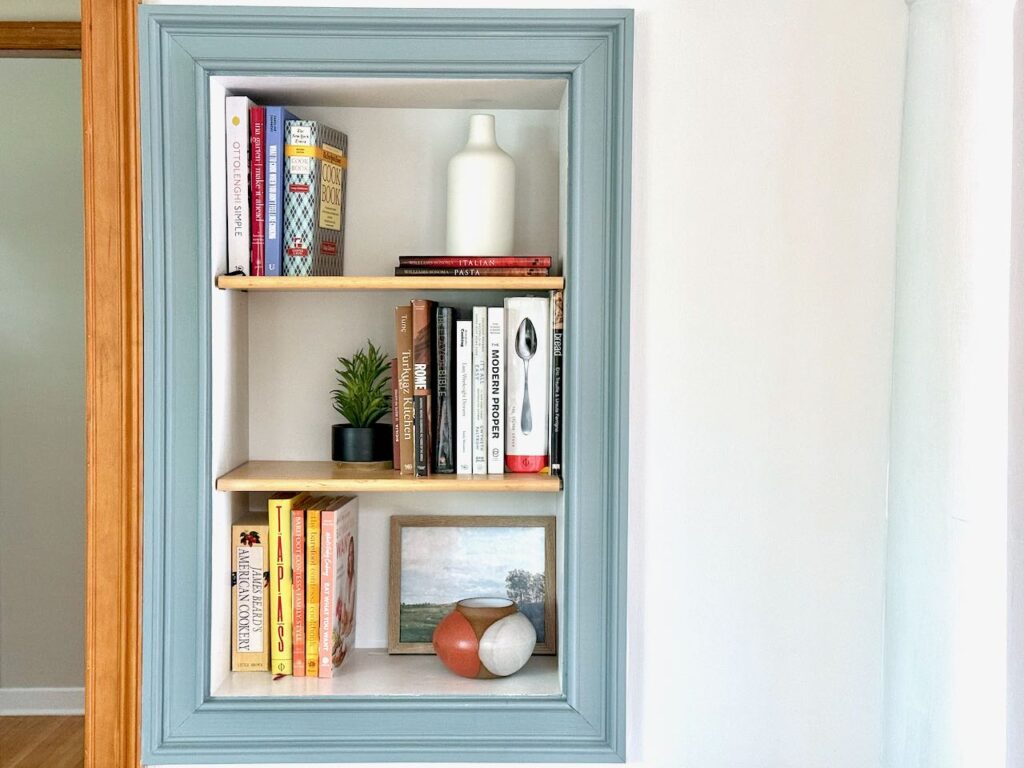
In my kitchen there is a small nook in the wall where I keep some of my favorite cookbooks. I’m not a fan of clutter, so the space is judiciously-curated. Only my absolute favorites of the moment earn a spot on this shelf. Some of those current favorites can be found here, with reviews of the books and why I love them. But in general, my love of cooking from cookbooks runs deep. I’ve thought about why that is, and here’s what I’ve come up with:
Cookbooks are Tangible
I spend a lot of time at my computer and on my phone. Far more than I’d like to admit. When I’m cooking I like to use that time to feel present. And cooking from a cookbook allows me to do that in a way that I cannot when I’m cooking from a blog or website. I love the act of physically holding a cookbook in my hands, flipping through the pages, and getting excited to pull ingredients together. I love that I can have my laptop closed, my phone on “do not disturb”, and just get lost in the process.
Cookbooks are Limited
What I mean by this is, sometimes I don’t need to have every option for every recipe that exists in the world to be available to me at all times. Sometimes it’s nice to have parameters. When I flip through a cookbook, I have inspiration at my fingertips — but within limits. In a world where the internet offers limitless possibility, I find the finite nature of a cookbook soothing.
Cookbook Recipes Find You
When I am on the internet, I am in search mode. It’s an active seeking for the perfect version of a specific recipe that I need asap for my next meal. But when I’m in a cookbook, it’s chill. I’m browsing. I don’t necessarily know what I’m looking for . . . until the right recipe finds me! And then I’m inspired — maybe by an image, or a unique list of ingredients that I wouldn’t have thought to pair together, or a technique that I’m excited to try. But I don’t have to know what I want before I find it, and that’s a lot of fun.
The Art of the Table of Contents
I love a good cookbook Table of Contents. It’s so interesting to see how different authors organize the recipes in their books and kick off the discovery process that the reader is about to experience.
Caroline Chambers organized her book “What to Cook When You Don’t Feel Like Cooking” by how long it will take to get a recipe on the table, starting with 15 minutes and working up to an hour or more. The Barefoot Contessa Cookbook starts with cocktails and works into lunch then dinners and desserts. Gaby Dalkin organized Eat What You Want with different themes from snacks to outdoor entertaining, vacation vibes, desserts, and sauces. In Simple, Ottolenghi organized the recipes using classic categories of veg, grains, pastas, meat, seafood and dessert BUT each recipe is classified into his “SIMPLE” system: tagged for Short on time, Ingredients: 10 or fewer, Make ahead, Pantry-led, Lazy-day dishes, and Easier than you think.
Based on how the author thinks and organizes their book, I develop a certain relationship with the author that keeps me coming back for more. Which brings me to. . .
The Relationship with the Author
The types of images, the way the book is organized, the introduction, the choice of recipes — all of these help me to get to know the cookbook author as a cook and writer. Based on this information, I form a relationship with the author.
Some authors feel like reliable friends who always know exactly what I want to eat. Others challenge me to try techniques or flavor combinations I’d never considered. A few become mentors, teaching me not just recipes but approaches to cooking that shift how I think about food entirely.
This is the magic that makes a cookbook more than just a collection of recipes. It becomes a trusted relationship that’s worth making shelf space for.
How do you feel about cooking recipes from cookbooks? Are you a cookbook lover like me? Or do you prefer using the internet? Leave me a comment and let’s chat!