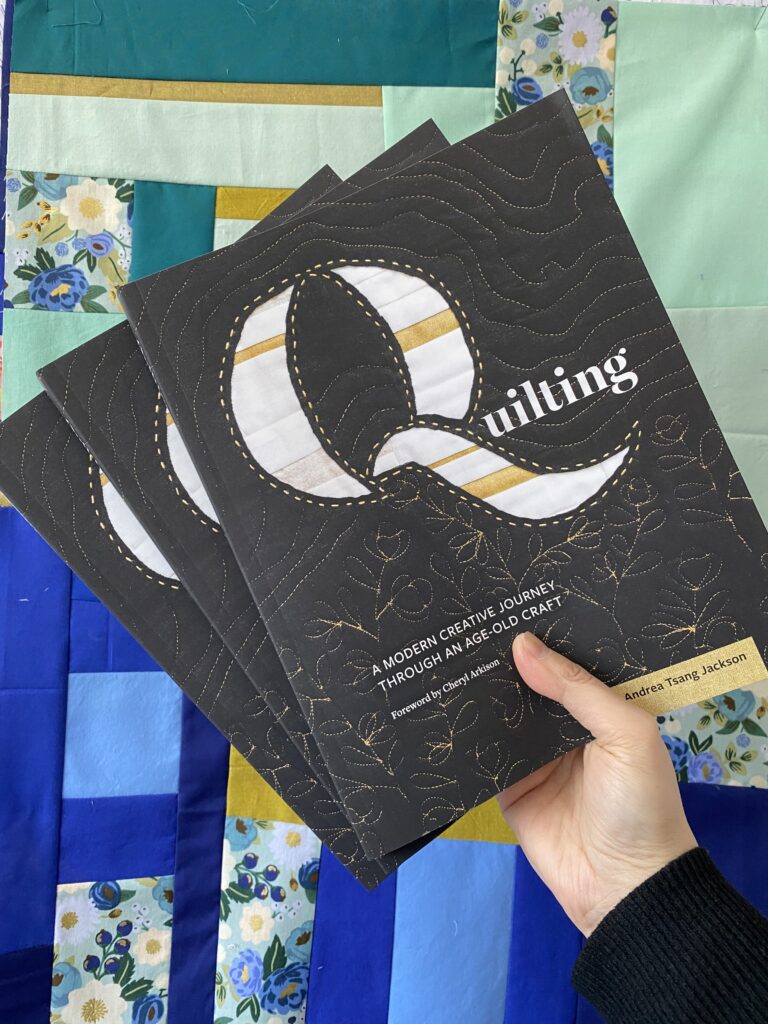
Hello! And welcome back! Today’s Meet Me In My Studio is a treat. Meet textile artist, quilt designer, author and teacher Andrea Tsang Jackson of 3rd Story Workshop. (You might remember that I first interviewed Andrea for week 8 of The Creativity Project in 2018!) Through her art, Andrea pushes the boundaries of traditional quilting by exploring scale and dimension, transforming what were once purely domestic objects into powerful works for public spaces. Her practice celebrates community and collaboration while examining themes of belonging and connection. Andrea’s first book, Patchwork Lab: Gemology, was published by Lucky Spool in 2019. More recently she has released a new book with Nine Ten Publications titled Quilting: A Modern Creative Journey Through an Age-Old Craft. Based in Kjipuktuk/Halifax with her husband and two sons, Andrea continues to expand what’s possible within the quilting medium while honoring the collaborative spirit that has always been at its heart.
Welcome, Andrea Tsang Jackson!
About Your Creative Space
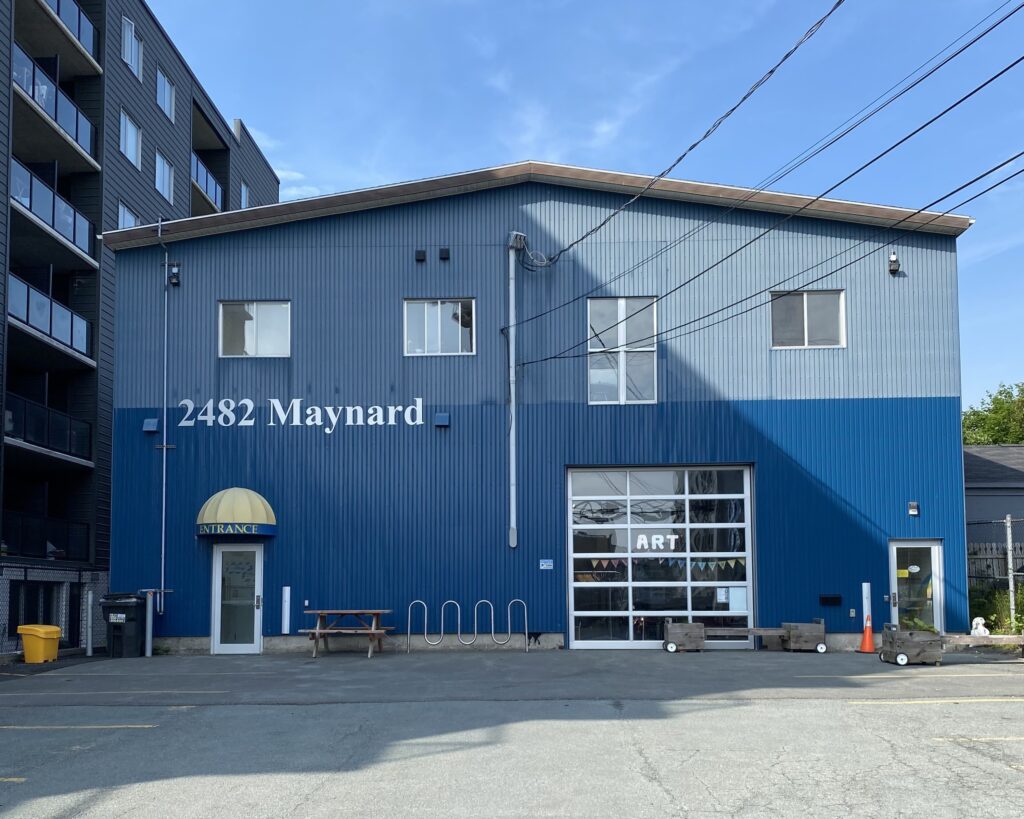
Please tell us where your studio is located. How would you describe the space?
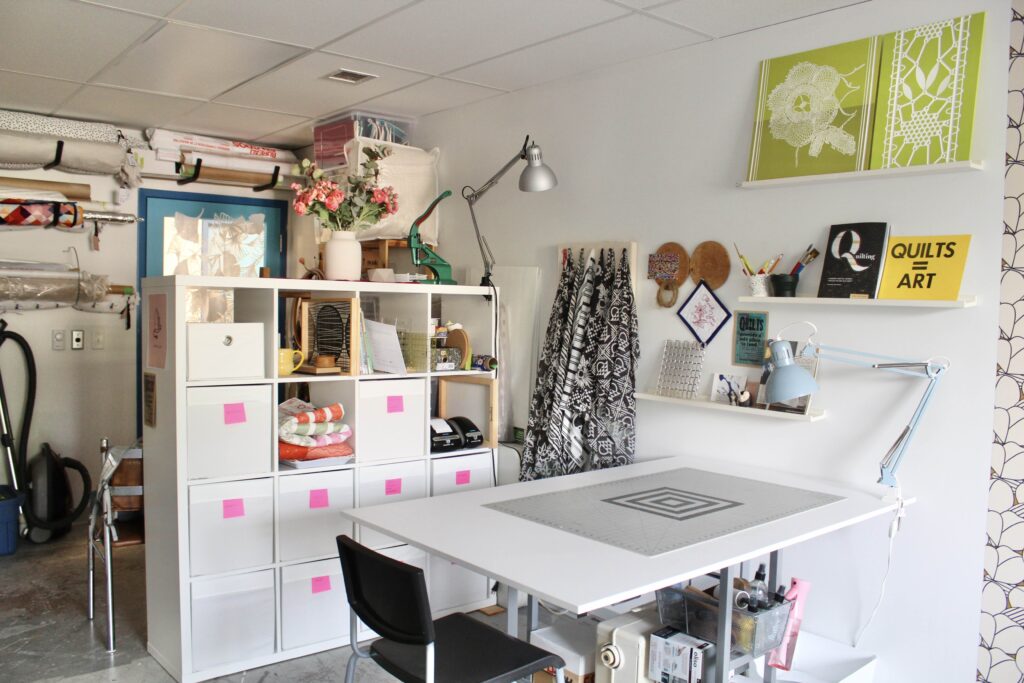
My studio is about 1 km away from my house. It’s part of an artists’ building that houses a contemporary gallery and community arts organization on the ground floor and artist’s studios above. The space itself is not anything particularly special – it’s a rectangular box with a concrete floor, drop ceiling, and a window at one end. However, what I feel when I arrive is that this is a space for potential – the potential to create, to leave a mess, to wonder openly, and to work and play hard.
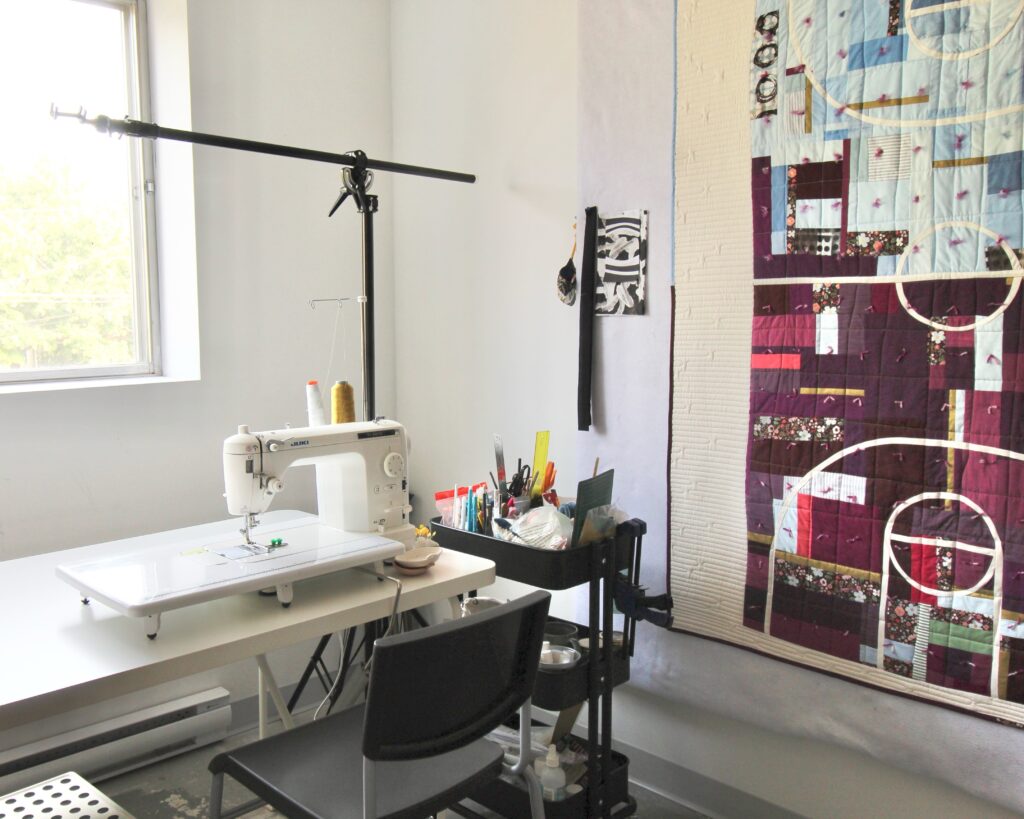
What’s one thing you wish you could change about your studio and how have you adapted to work with this limitation?
I wish there was more natural light! I have one modest window at one end of the space. Having been in this space for over four years, it was time for a revamp this spring. My favourite part of the new studio setup is the storage and archiving area. Over the years, I’ve accumulated quilts, project samples and files, printed quilt patterns, notions, and supplies, and more! Using an IKEA shelf as a room divider, a part of the room furthest from the window has been sectioned off to be an area for storage. It frees up the rest of the space to be the “working” side of the studio.
Favorites and Recommendations
What’s your favorite storage solution in your space?
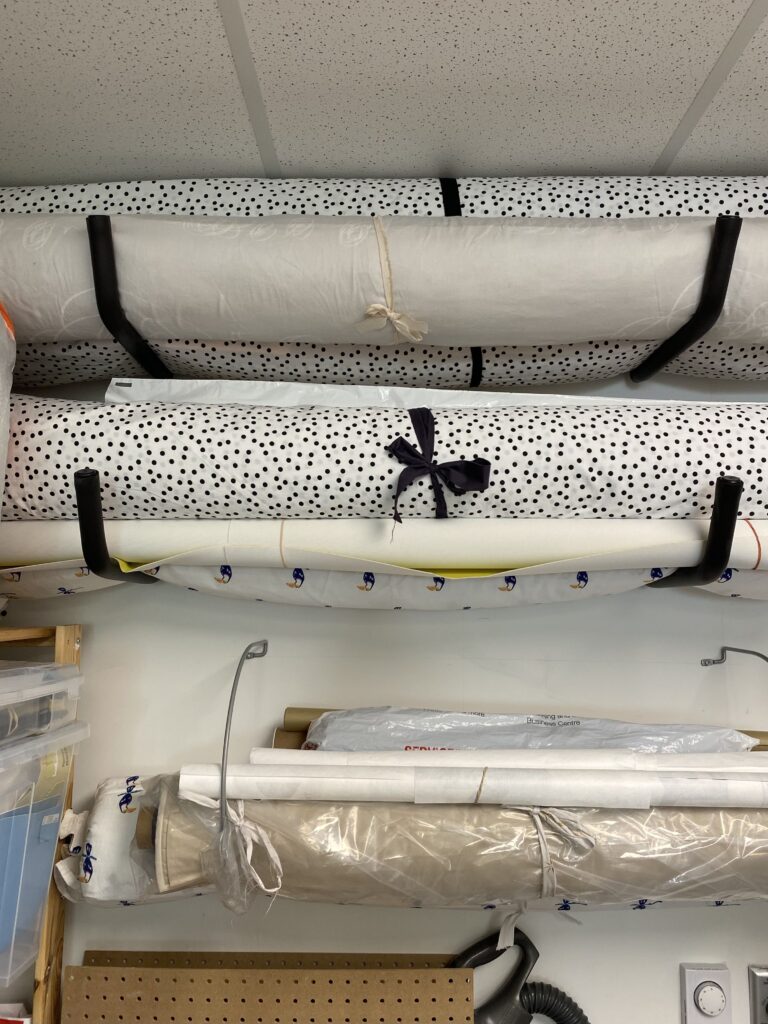
As part of the overall sequestering of storage space to one area, I have rolled up my quilts, covered them in old clean sheets, and they now rest on brackets meant to hold kayaks. They are likely meant for garages and sheds so they aren’t the prettiest, but they do the trick. I can fit six to nine rolled quilts on one pair.
How do you approach your work or creative practice? Do you dive right in, or ease into work mode more slowly?
Over breakfast at home, I make a to-do list for the day so when I arrive at the studio, I try to dive in right away. If I need to do any substantial writing (like for a book! Or a grant application!) or deep creative work or problem solving, I do that first. My brain is at its freshest at that time of day. I do some administrative work in the late morning, and then I try to make something with my hands after lunch.
What’s a piece of advice you’d give someone trying to become more intentional about their creative studio time/routine?
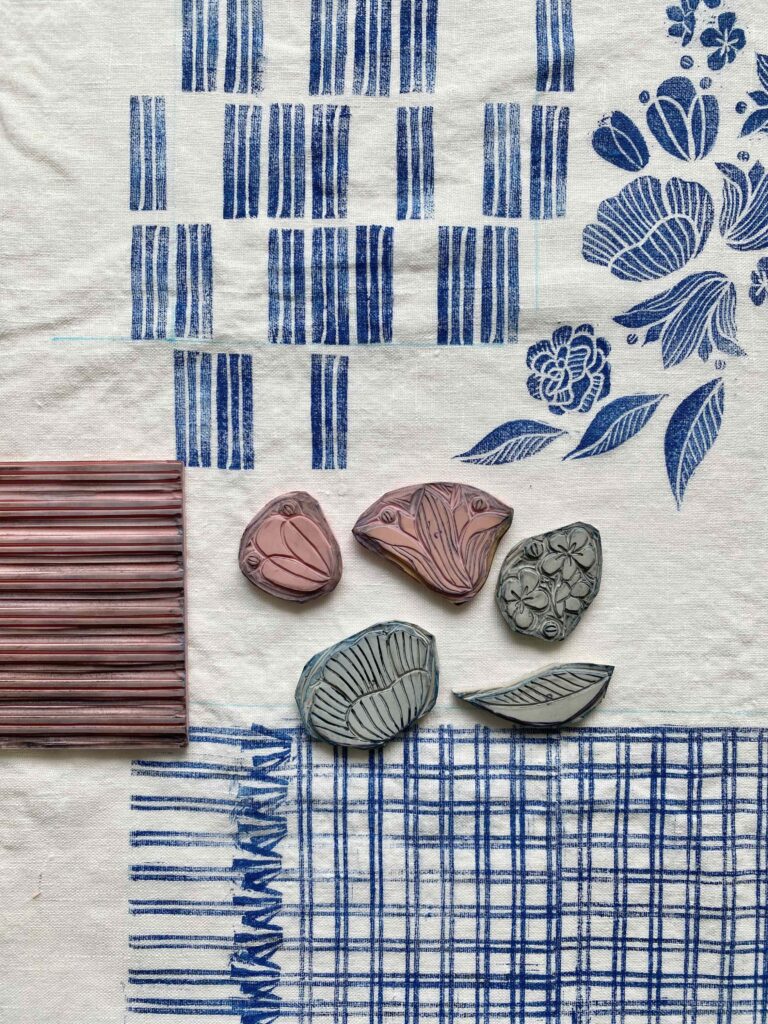
Block off the time. Whether it’s 5 or 10 minutes a day, dedicate the time. You can set an alarm off on your phone, indicating it’s studio time, or write it in your calendar or to-do list. This past month, after my studio space was revamped, I spent a week block printing on paper and fabric. I have been wanting to spend more time doing it after taking a workshop with Karen Lewis in 2019 and another in 2024 with Alissa Kloet of Keephouse Studio. I had put this “self-imposed art residency” in my calendar several months ago; so I made sure that my calendar was clear, my “new” studio was ready to go, and my supplies were in place before the week started. We don’t all have the luxury of a whole week but it might be a Saturday morning or 10 minutes before getting going for the day.
What do you do when you’re feeling creatively stuck?
I switch media and scale. Although I always come back to quilting, I often dabble in drawing (on paper or on my iPad), block printing (see above), or garment sewing or bag making. I need to make something while ideas simmer for bigger quilts or projects.
What’s your favorite project you’ve ever made in your space and what makes it special to you?
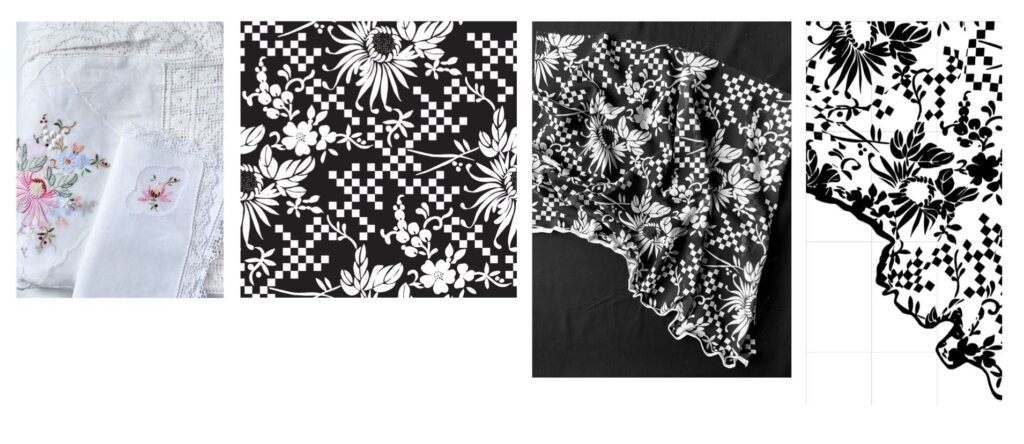
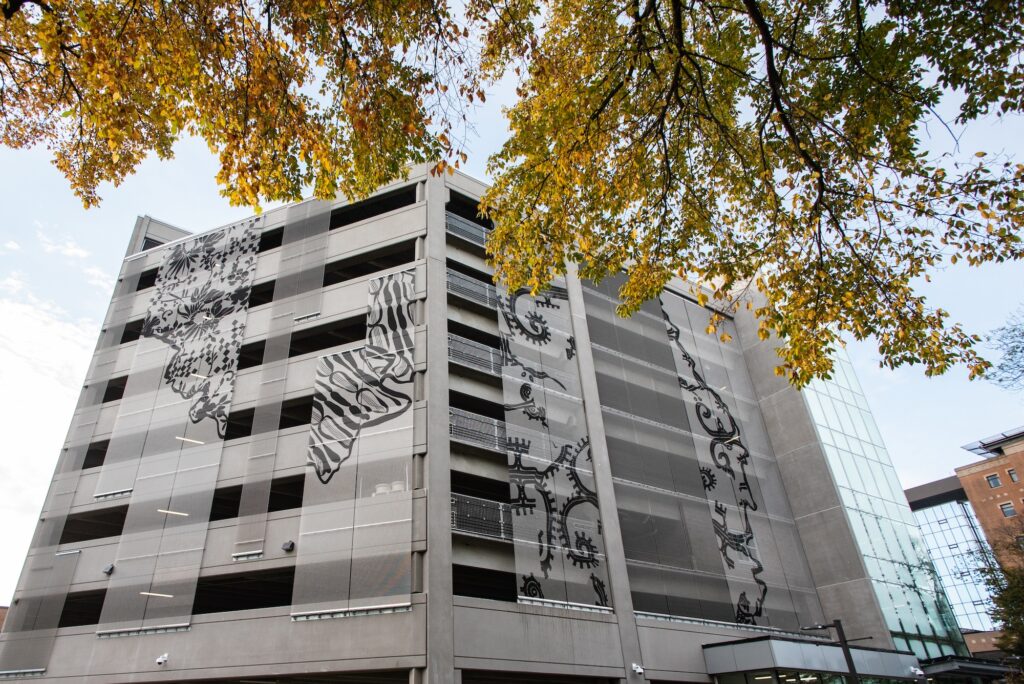
When trying to decide whether or not to rent this studio space when it became available, I remember my husband telling me that a separate space outside the home might allow me to expand the type of projects I work on in my art practice. A few months after I moved in, I landed my first public art project, In Conversation. This artwork for a hospital parking garage intertwines culture and craft, using a public parking building as a canvas for telling stories and experiences of individuals involved in craft traditions from around my province. It wasn’t that I needed a bigger space to work on this project – I developed graphics based on interviews and research – but it was useful to have a different space to create it.
Quick Finishers
The silliest thing in my studio is: bungee cords. I can store things creatively from the ceiling.
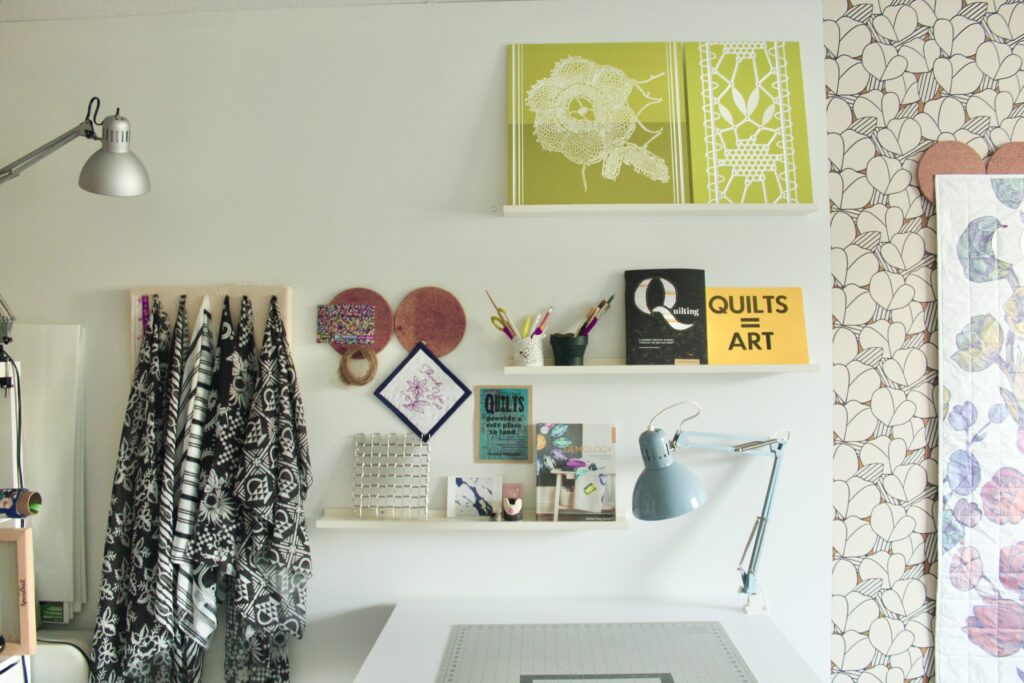
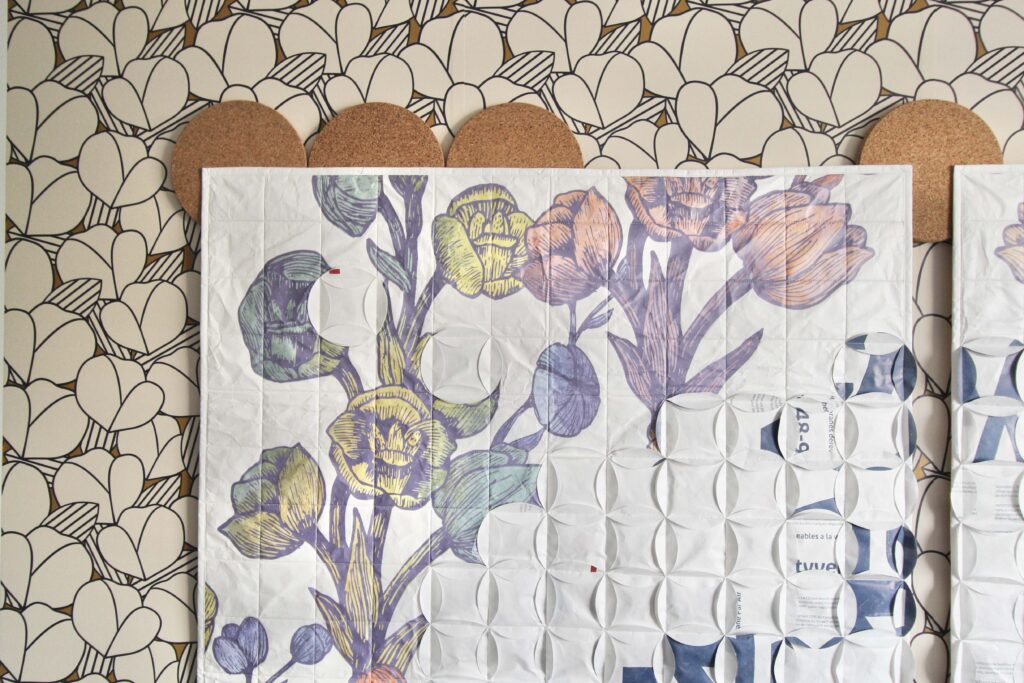
A weird hack in my studio is: installing cork trivets on the wall as a way to temporarily hang quilts for photography.
I always feel best when: I am learning a new artistic medium.
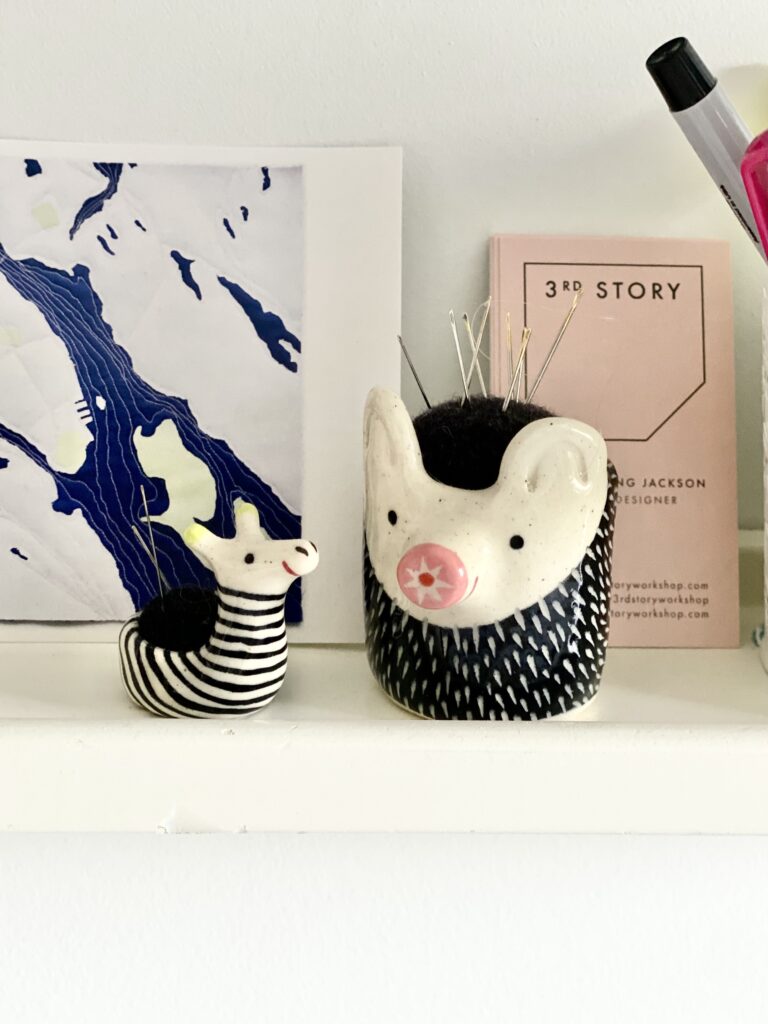
The studio tool I’d rescue first in an emergency is: my two ceramic pin cushions by Deborah Fisher of Fish Museum + Circus.
Looking Forward
Anything exciting that you’re working on now?
In the next few months, I’m opening the vault! I will be releasing some smaller block patterns that have been hidden in my library for a few years. There will be a range of things to try – diamonds, half-rectangle triangles, and more.
That sounds exciting! Thank you so much, Andrea! We have loved having this chance to get to know you and your studio! To learn more about Andrea you can follow her on Instagram, visit her website, and purchase her book Quilting: A Modern Creative Journey Through an Age-Old Craft.
Want more interviews? Check here.
Want to be featured? Reach out!